Big Give Women and Girls Appeal 2025
Our Big Give Women and Girls Campaign is live! Nobody should suffer from period symptoms holding them back.
The report is part of the launch of Wellbeing of Women’s Period Symptom Checker
Wellbeing of Women has today launched a report about the impact of period problems on women’s everyday lives, which shows that they wait on average nearly two years from symptoms of heavy bleeding and pain starting to seeking medical help.
To combat this, the charity has worked with doctors, researchers and women who have lived experience of heavy and painful periods to develop an Period Symptom Checker so women can understand whether their period needs further investigation or if they could be helped by self-care remedies they can access from their local pharmacy or via a change in lifestyle.
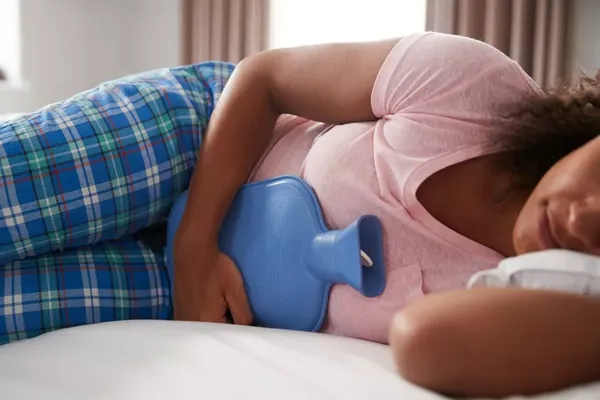
Many women are putting up with disabling levels of pain and heavy bleeding, which negatively impacts many aspects of their lives, including their health and wellbeing, education, careers and relationships. More than half of women say having a period negatively impacts their life.
Half of women said their period symptoms have been dismissed, with just under a quarter of these women feeling dismissed by healthcare professionals and over a quarter of women by their partner or male family member.
Over half of women have been shamed in relation to their period symptoms on at least one occasion, and over a third say this has happened more than once. Despite period mishaps having happened to almost 9 in 10 women, 77% of women would feel ashamed if they had a period mishap in public and 45% would feel ashamed if they had a period mishap at home, such as flooding their bedsheets or leaking onto furniture.
Sadly, the world of work brings more challenges. Over half of women said they would feel uncomfortable discussing their periods with their boss or manager and a similar number said they worry that if they took time off for period symptoms it would negatively impact their career. This is not an unfounded fear. Over a third of men surveyed said they would be hesitant to promote someone who frequently took time off for their period-related symptoms. Our previous survey showed that nearly 3 in 5 women surveyed have experienced problems at work in relation to their period.
The survey also found that only 1 in 10 women can identify all the signs of heavy menstrual bleeding. Better education about menstrual health is urgently needed to encourage women to seek treatment, be it self-care or an appointment with their GP or community healthcare professional.
Wellbeing of Women Chair, Professor Dame Lesley Regan said: “It is shocking that women are still suffering severe period pain and heavy bleeding in silence. A variety of medical treatments could be offered to girls and women with these distressing conditions.
We hope that our new Period Symptom Checker will encourage women to speak up and seek help for their period problems. It aims to promote better engagement with GPs and other community healthcare professionals by creating a letter that outlines how their symptoms are affecting their everyday lives.”
Henrietta Agbenorto, who has lived experience of fibroids said: "I spent over a decade battling extreme fatigue and relying on iron infusions. Despite my symptoms worsening—dizzy spells, shortness of breath, weak limbs, and blurred vision —my anaemia was always attributed to my vegetarian diet and heavy periods without further investigation. It wasn’t until I found a doctor who looked deeper into the root cause that I finally got answers. She discovered a protruding bulge in my stomach, suggesting I might have fibroids."
Dr Michael Mulholland, Royal College of GPs said: “It’s never easy to hear when any patient reports not feeling as though they have been listened to. We want all women to feel confident about turning to their GP for timely and appropriate care. Women’s health is a key part of the RCGP curriculum that all GPs in training must demonstrate competence of before they are able to practise independently as a GP, and we will continue to support initiatives like Wellbeing of Women’s Period Symptom Checker to raise awareness and challenge the normalisation of period problems.”
Our Big Give Women and Girls Campaign is live! Nobody should suffer from period symptoms holding them back.
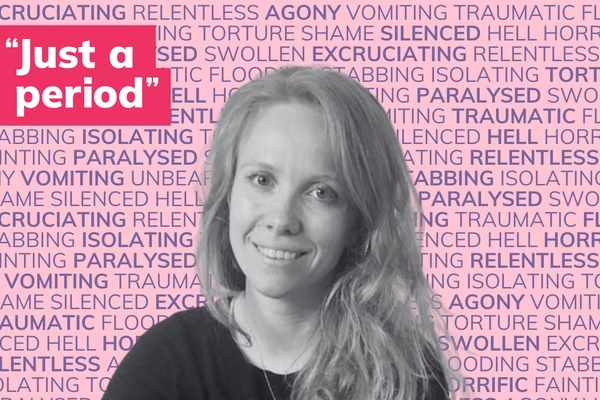
Like many other women in this community, it has taken many years to be acknowledged with endometriosis, a debilitating condition that I have learnt to manage.
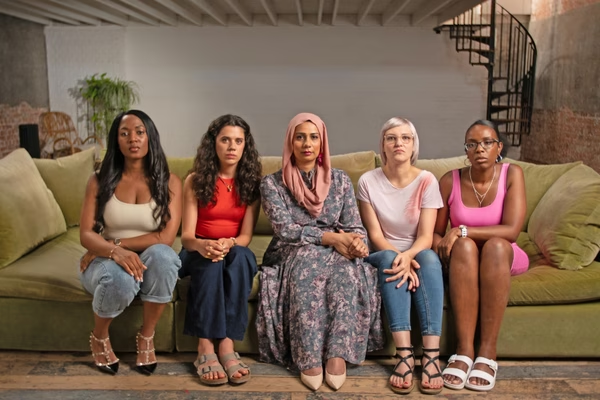
Our ‘Just a Period’ Big Give Christmas Challenge is live - donate now to end the shame and silence surrounding period symptoms