
Big Give Christmas Appeal 2025
Our Big Give Christmas Appeal is live! Help us fight back against cancer this Christmas!

Wellbeing of Women have announced funding for 16 research projects that will cover every key stage of the life course – from using AI to treat ovarian cancer, to exploring how a plant compound can prevent preterm births and investigating a link between fertility and cardiovascular health later in life.
Despite women making up almost half of the world’s population, women’s health is chronically underfunded and under-researched. Clinical trials have historically focused on male bodies, with women either under-served or left out entirely. This is a key driving force behind a deep-rooted gender health gap where women experience barriers to treatment and poorer health outcomes.
The new research projects will play a vital role in closing this gap, covering unique areas often unexplored by health research and investing in early-career researchers.
Jeremy Barratt, Director of Research at Wellbeing of Women, said:
“With this funding comes a fantastic opportunity to support the next generation of researchers whose work will have a long lasting impact on women’s health."
For too long, women have experienced the effects of decades of underinvestment in research relating to their health.
"The gender health gap urgently needs addressing, and one of the most effective ways to achieve this is by generating high quality research that will inform future awareness, diagnosis and treatments.
These new projects tackle some of the most pressing health issues affecting women today, and we are delighted that this year’s awards will support research spanning the entire life course. We are also immensely grateful to our research partners, whose collaboration and co funding enable us to leverage additional investment, extend our impact and focus our resources where they are most needed—ultimately helping to shape the future of women’s health.”
Practice nurse Carmel McCarthy at University of Nottingham Health Service is analysing the records of 1000 women who had their arm implants removed to better understand decision-making about family planning, hormone hesitancy, and how to support more women to make reproductive choices that work best for them. Co-funded with the College of Sexual & Reproductive Healthcare
Ms Jessica Davies at KCL is addressing a key gap in our understanding of how PMDD (Premenstrual Dysphoric Disorder) shapes thoughts, feeling and choices about pregnancy and parenthood, including concerns about managing symptoms during and beyond pregnancy and fears about passing PMDD on to children. Co-funded with the College of Sexual & Reproductive Healthcare.
Dr Robert Heaton at University of Liverpool is investigating causes and potential future treatment targets for the poorly understood and under researched, yet extremely common menstrual health condition – adenomyosis – at the cellular level with state-of-the-art experimental approaches at the bench.
Female sex workers (FSW) experience very high rates of unplanned pregnancy, but reproductive health services are often unreasonably difficult for sex workers to access. Dr Esther Lousada is a doctor at the Royal Free Hospital, London studying the barriers to accessing effective contraception – and whether an improvement can be made - for FSWs in North London.
Contraception is now available at many pharmacies in the UK, with hopes of relieving busy GP practices and enabling more women to access the healthcare they need. Dr Isobel Ward, Applied Health researcher at Bristol Medical School, is evaluating how well this service is working thus far, and whether it reaches the people who need it most.
Researcher Manouk Olthof at KCL is investigating whether quercetin, a natural plant compound, may reduce infection and inflammation in the cervix and vagina and offer potential new strategies to help prevent pre-term births.
Carlotta Valensin is a researcher at KCL looking at the placenta in women with Type 1 Diabetes, specifically how epigenetic changes – or changes to your genes caused by behaviour and environment – during pregnancy affect placenta development.
Dr Anangsha Kumar is a Clinical Research Fellow at KCL, investigating a condition where bowel tissue grows outside of the abdomen during fetal development in the womb. Dr Kumar will look for ways to identify earlier changes in tissue with advanced MRI techniques to enable more effective, possibly life-saving- interventions.
Dr Anastasia Martin, a Clinical Fellow at KCL is researching better ways to predict preterm births – particularly in the case of twins – using joint tests for cervical stiffness and vaginal swabs. Co-funded by the British Maternal & Fetal Medicine Society.
Dr Sophie Reed, lecturer at Swansea University, is investigating changes in the immune system during pregnancy, specifically in the nose, where flu and other viruses first enter the body. Pregnant women are more likely to become ill from the flu during pregnancy, but little is known about why.
Dr Ines Machado is a researcher at University of Cambridge, investigating ways in which AI can help us find new ways of treating ovarian cancer patients. Co-funded with the British Gynaecological Cancer Society.
Dr Celia Brochen at UCL is investigating whether a non-invasive blood test can predict ovarian cancer risk based on changes in DNA found circulating in the blood.
Dr Rachel Pounds, University of Birmingham, is researching a type of ovarian cancer that affects younger women (40-50 years) and whether the immune system could be supported to better fight this type of cancer. Co-funded with the British Gynaecological Cancer Society.
Dr Joseph O'Sullivan, University of Manchester, is conducting research on improving the care for women with pelvic prolapse. He is looking at whether bacterial growth on the meshes routinely used in prolapse treatment might be leading to avoidable pain for women.
Dr Natalie Shur, University of Nottingham, is researching the intersection of menopause and mobility in women, and whether changes in metabolism increase menopausal women’s risk of frozen shoulder and associated complications. Funded in partnership with Vichy Hormonall.
Dr Sarah Willetts, University of Manchester, is investigating the relationship between fertility and long-term cardiovascular health. Co-funded with the Royal College of Obstetricians and Gynaecologists.
Our Big Give Christmas Appeal is live! Help us fight back against cancer this Christmas!
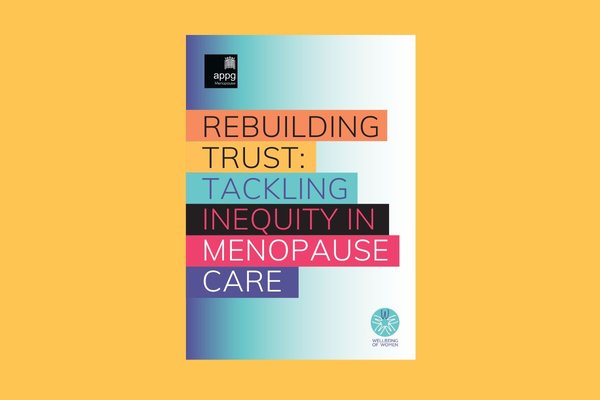
This report summary shares the findings and recommendations from the Menopause APPG (All-Party Parliamentary Group) report looking at how women and people from marginalised communities experience menopause care in the UK — and how to make it fairer for everyone.
Menopause care is still failing to meet the needs of some of the most marginalised in society. The All-Party Parliamentary Group (APPG) on menopause has gathered evidence revealing the barriers experienced by women and people from marginalised communities, and what needs to change so that everyone has access to support when they need it.