
What matters most in female fertility preservation?
The team at University College London and their collaborators are bringing together women and healthcare providers to decide where research should go next.
Wellbeing of Women researcher Dr Nicola Tempest is shedding new light on the womb and updating scientific knowledge on women’s health
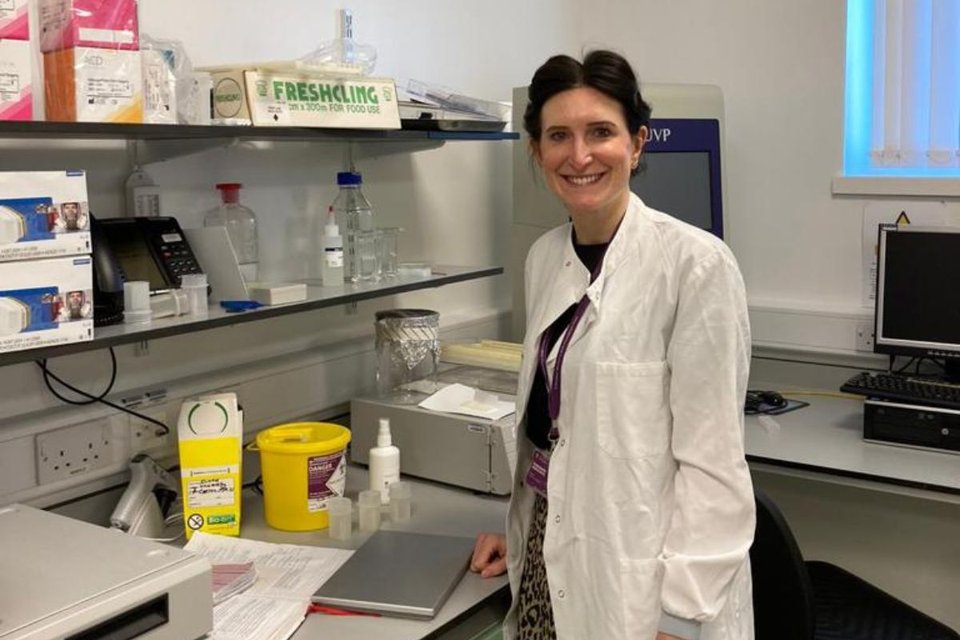
Google “endometrial glands” and you’re likely to get the following AI-generated response:
“Endometrial glands, or uterine glands, are tubular glands lining the endometrium, the inner lining of the uterus”
If you have a womb, you will have endometrial glands and have probably filed them under “things we didn’t learn about our bodies at school”. There are many different types of glands, and together they make up a huge part of how our bodies communicate internally and maintain the fine balance of many different functions.
The lining of the womb, or ‘endometrium’, is the part of the womb that is partially shed in a period and contains endometrial glands. These glands are responsible for changing the environment of the womb, not only during pregnancy but throughout the course of a menstrual cycle.
Dr Tempest has advanced accepted scientific knowledge on the womb and become an inspiring source for far-reaching work.
Automated search engines such as Google’s - and the bulk of research on women’s health that informs it – have long assumed these glands are simple tube-like structures. But thanks to the research of Dr Nicola Tempest and her collaborators we now know these glands are differently shaped than previously thought, contain stem cells, and have huge potential for treating a range of conditions affecting women’s health.
Over the last 13 years Wellbeing of Women has supported Dr Tempest’s pioneering research in womb science. From her first WoW award in 2012, to her recently completed WoW-funded postgraduate research investigating ways to help women with the fertility-related condition of Recurrent Implantation Failure (RIF) - and winning the prestigious SRI Laxmi Baxi award along the way - Dr Tempest has advanced scientific knowledge on the womb and become an inspiring source for far-reaching work.
Like other important organs, the womb has many functions. For example, the gut doesn’t just absorb nutrients from the food you eat; it has different kinds of muscle that help move food through your body. Similarly, the womb doesn’t just grow babies; it carefully orchestrates changes in its environment to prepare for possible pregnancies, or to repair itself when pregnancy doesn’t happen.
The womb doesn’t just grow babies; it carefully orchestrates changes in its environment to prepare for possible pregnancies, or to repair itself when pregnancy doesn’t happen.
Issues in the womb’s ability to prepare or repair itself can lead to different gynaecological conditions like heavy menstrual bleeding or fertility issues, while too much repair and regeneration (called hyperplasia) could be an early sign of certain kinds of cancer. The intricate balance of the womb’s many processes – not to mention its complex cyclical nature - all make the womb a particular challenge, and urgent necessity, for scientific research.
Stem cells are a type of bodily cell that can produce other, more specialised cells. Given their ability to become a variety of other kinds of cell, they have been described as the ‘holy grail’ and ‘superhero cells’ of medicine.
Researchers have long suspected that stem cells exist in the womb. They are essential for growing tissue, and researchers believe that their presence in the womb is what allows it to regenerate itself each month after bleeding.
Researchers believe that stem cells in the womb is what allows it to regenerate itself each month after bleeding.
As part of her PhD thesis Dr Tempest proved the existence of stem cells in endometrial epithelial cells - the cells in the glands of the lining of the womb. She demonstrated that a method used to find stem cells in other organs, including the bowel and prostate, could be used to prove the existence of stem cells in the womb.
She travelled regularly to study with experts in London to master new techniques and bring these skills back to her lab in Liverpool, increasing the research capacity of her university and enabling other people to undertake research using these techniques. The results – that stem cells definitively existed in the womb’s lining, and that they were likely found in the deepest layers of the endometrial glands – were promising, and she applied for a WoW Research Training Fellowship to continue the research.
Dr Tempest's first grant helped her prove that stem cells existed in the glands of the womb, but more research was needed to confirm it – and it involved changing widely accepted scientific knowledge in the field.
Knowing where stem cells are is key to targeting them – and improve treatments for women suffering from conditions of the lining of the womb.
Her PhD research showed that these glands were not simple tube-like structures, as previously believed, but branched out like roots. This branching structure - more like the horizontal underground stems found in grass or ginger - is part of what allows the lining of the womb to repair itself without scarring during menstruation. The stem cells present in this deeper, complex and overlapping branching structure mean that if damage occurs, the stem cells are both more present and more protected – and able to help the womb repair itself again in the future.
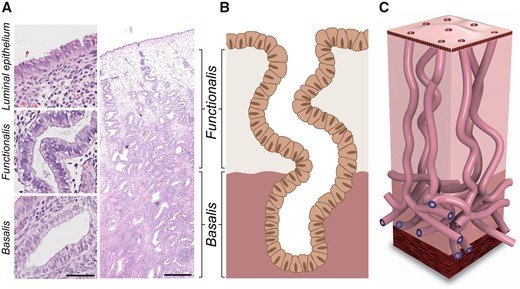
Thanks to her research, science now has a more exact knowledge of not only the existence of stem cells in the womb, but where they are and the structure around them. Knowing where stem cells are is key to targeting them – first for research and then to improve treatments for women suffering from conditions of the lining of the womb. These insights that have changed scientific understanding in the field and women’s health textbooks (if not yet Google).
Now, with a WoW Postdoctoral Research Fellowship, Dr Tempest is applying her knowledge to help women undergoing IVF with a devasting condition, Recurrent Implantation Failure (RIF).
During IVF, the egg and sperm meet outside of the body in a lab, where they are grown for three to five days. The embryo (the structure formed when the egg is fertilised by the sperm and divides and grows), is then transferred back into the womb. Some people will have a successful pregnancy following the transfer, but some people will unfortunately have multiple embryo transfers and no pregnancy.
Research is the only way to improve outcomes for individuals and couples suffering with infertility.
Dr Nicola Tempest
NIHR Academic Clinical Lecturer and Wellbeing of Women Postdoctoral Research Fellow
RIF is diagnosed after someone experiences three transfers with no resulting pregnancy. It can cause severe distress to people desperately trying to have a child. It affects 1 in 10 women going through IVF treatment, making it a common but poorly understood condition without good options for treating it.
Dr Tempest said, “When people attend a fertility centre after years of infertility they breathe a sigh of relief. They imagine that they are finally going to have a much-wanted baby. Unfortunately, nearly 75% of embryo transfers do not result in one."
A fertility journey is medically and physically draining with a rollercoaster of highs and lows. I want fertility outcomes to be better. I want more people, desperate to have a child, to have the families that they want...Working both clinically and in research ensures I understand what the people I treat really want.
Dr Nicola Tempest
NIHR Academic Clinical Lecturer and Wellbeing of Women Postdoctoral Research Fellow
Like many of the innovative and deeply human-focused researchers funded by WoW, Dr Tempest practises in the NHS and has designed her research with patients in mind, “A fertility journey is medically and physically draining with a rollercoaster of highs and lows. I want fertility outcomes to be better. I want more people, desperate to have a child, to have the families that they want. Research is the only way to improve outcomes for individuals and couples suffering with infertility. Working both clinically and in research ensures I understand what the people I treat really want.”
Wellbeing of Women is proud to have supported Dr Tempest in her work unlocking multiple mysteries of the womb. You can follow her dispelling misinformation about women's health on her podcast, Between 2 Ovaries, available on Apple Podcasts, Spotify and Youtube.
The team at University College London and their collaborators are bringing together women and healthcare providers to decide where research should go next.
Wellbeing of Women has invested £4,800 into Dr Heather Garthwaite’s research into whether an invasive test is the best way of determining whether a woman going through fertility treatment is at risk of having a multiple pregnancy

Wellbeing of Women has invested £192,724 into Dr Jane Cleal’s research into understanding why some women struggle to become pregnant or experience miscarriage