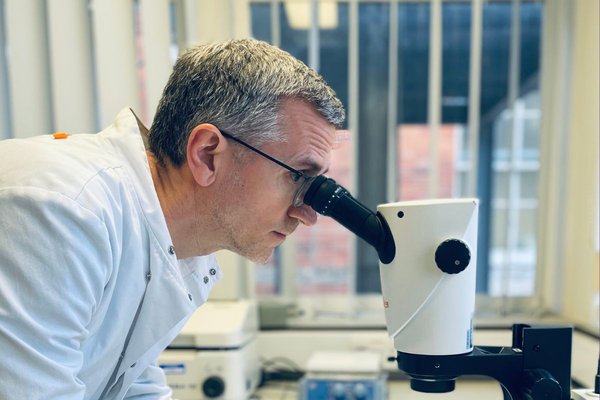
Rare, but deadly: tackling placental cancer
The vulva is the external part of the female genitals. There are around 1,400 new cases in the UK every year.

The vulva is the external part of the female genitals, around the opening of the vagina. It includes:
Vulval cancer is cancer that starts in any of these areas. It most commonly starts on the labia. In rare cases it can start in the area called the perineum, which is between your vagina and your bottom (anus).
Vulval cancer grows slowly and sometimes starts as a growth of abnormal cells. These are called vulval epithelial neoplasia – or VIN. These cells are known as a precancer and in some cases can develop into vulval cancer.
Vulval cancer is rare. There are around 1,400 new vulval cancer cases in the UK every year.
The risk of vulval cancer increases with age. It’s most common in women over the age of 65. However, young women can get pre-cancerous changes and cancer. If you notice any soreness or inflammation that will not go away, whatever your age, speak to your GP.
7 in 10 cases of vulval cancer are caused by certain types of human papilloma virus (HPV). HPV is the name given to a group of viruses with more than 100 different types. Not all cause cancer. The ones that can cause cancer are known as high-risk HPV.
HPV is common and most people will get the HPV virus at some point in their life. It is spread through close skin-to-skin contact during any type of sexual activity with a partner.
Most of us won’t realise we have HPV. It can stay at very low or undetectable levels for many years without causing problems. In most cases, the body’s immune system will get rid of the virus within two years. This means an HPV infection may have come from a partner a long time ago.
The HPV vaccine is offered to children aged 12 to 13. It protects against the types of HPV that cause vulval cancer, as well as cervical and vaginal cancer.
There are a few other factors that can increase your risk of developing vulval cancer, these include:
Usual or undifferentiated VIN more commonly affects people under 50. It is thought to be caused by HPV.
Differentiated VIN (dVIN) is a rarer type and usually affects women over 60. It is linked to skin conditions that affect the vulva.
Anything that can reduce your risk of getting HPV and that supports your immune system to clear it if you do can help to reduce your risk of vulval cancer. You can reduce your risk of vulval cancer by:
It’s estimated that 69% of vulval cancer cases are preventable.
Symptoms of vulval cancer include a lump, sore or ulcer on the vulva. This may be swollen, itchy, painful and bleed.
You may have changes to the skin on the vulva, such as thick, raised, lighter or darker patches, or a mole that changes colour. Or you might experience burning when you pee, but this could be caused by many different things.
Go and see your GP if you have any of the symptoms mentioned – treatments are much more successful when cancers are diagnosed early.
Your GP will examine you and check your vulva.
They should make you feel as comfortable as possible. You could also ask to see a female doctor if that helps.
If they think it might be cancer, you will be referred to the hospital for a biopsy. You should be seen at the hospital within two weeks.
A biopsy means that a small piece of skin from your vulva will be removed and analysed. You will have a local anaesthetic to numb the area, so you can’t feel anything.
If the examination or biopsy show cancer you may be sent for further tests to help determine if the cancer has spread.
The cancer may be staged and graded to help inform the treatment plan. This describes the size, whether it has spread and the changes in the cells. Find out more information about staging and grading on the Macmillan website.
Treatment for vulval cancer normally involves surgery. Some people may need to have radiotherapy and chemotherapy as well. But this depends on the size of the cancer, if it has spread and your general health.
It’s a good idea to discuss what your options are with your doctor and the benefits and risks of each. This will help you reach a decision that is best for you.
Treatment for vulval cancer can cause side effects. These include changes to the way your vulva looks, sexual side effects and bladder and bowel problems. Your health professionals will give you treatment and support for these.
If you have not yet been through the menopause, some treatments may trigger early menopause. Sadly, this means you will no longer be able to have children. However, you may be able to freeze your eggs before treatment. There are also various treatments that can help with menopause symptoms. Read more about the menopause.
You can read more about vulval cancer treatment options on Macmillan’s vulval cancer pages.
If you have vulval cancer, your outlook will depend on how soon the cancer was found, how much it has spread, your age, and your general health.
Overall, around 7 in every 10 women diagnosed with vulval cancer will survive at least 5 years. Your GP will take your personal circumstances into account and give you more information about your outlook.
Once your treatment is finished, you'll get regular follow-up appointments. This means any cancer that comes back can be treated straight away.
Worries about a possible diagnosis or living with cancer can be very challenging. Sometimes it can help to speak to people who understand and have experience of a vulval cancer diagnosis.
There is more information on vulval cancer on the NHS website.
If you are worried about vulval cancer or have been diagnosed with it, there are places to get support:
Watch again: Preventing gynae cancers webinar
In our latest webinar, we asked, can we prevent gynaecological cancer? We discussed the symptoms, how to reduce your risk, screenings that are available, and how to make sure screenings are accessible to all.You can also watch our previous webinars on gynaecological cancers, which feature experts and people with lived experience:
Let’s talk gynaecological (gynae) cancers – with Dr Neil Ryan and Sbba Siddique
Let's talk gynaecological cancers webinar – with Dr Sarah Kitson
As a women’s health charity, part of what we do is fund research to save and change the lives of women, girls and babies.
We are currently co-funding a research study with the British Gynaecological Cancer Society to investigate if an innovative new technology can help detect and treat vulval and cervical cancers faster and more accurately.

Finding the right information and support about gynaecological cancers can feel difficult, especially if you face barriers because of language, disability or a lack of tailored resources.

Cervical cancer develops in the cervix. This is the opening of the womb (uterus) into the vagina. There are over 3,200 cases diagnosed every year in the UK.
Ovarian cancer is cancer of the ovaries or fallopian tubes. Around 7,500 women get ovarian cancer in the UK each year.